
AP, Procurement & Spend · AI & Automation
AP Is Moving From Automation to Agency
Ramp's Agents for AP turn invoice processing into a test case for autonomous finance.
For AP Specialist · AP Leader · Controller · Finance Operations · Finance Systems · CFO
Level All Levels
The Work Did Not Disappear When AP Went Digital
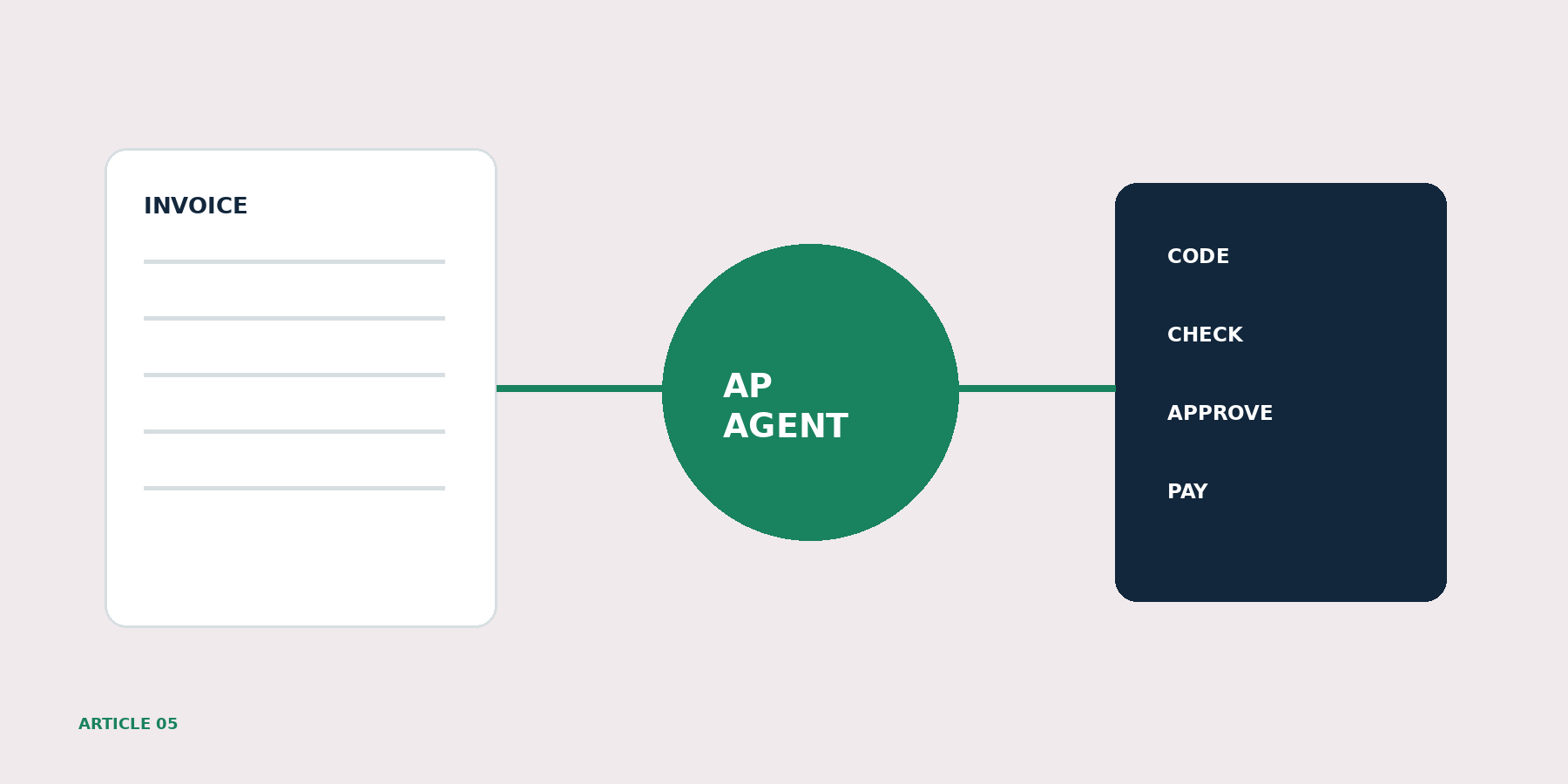
Accounts payable has spent years digitizing paper. Invoices arrive electronically, OCR extracts fields, workflows route approvals and payment files move through connected systems. Yet AP teams still spend a surprising amount of time deciding what the software should do next: coding a line, checking a mismatch, chasing an approver, reviewing a suspicious invoice or determining whether a payment can proceed.
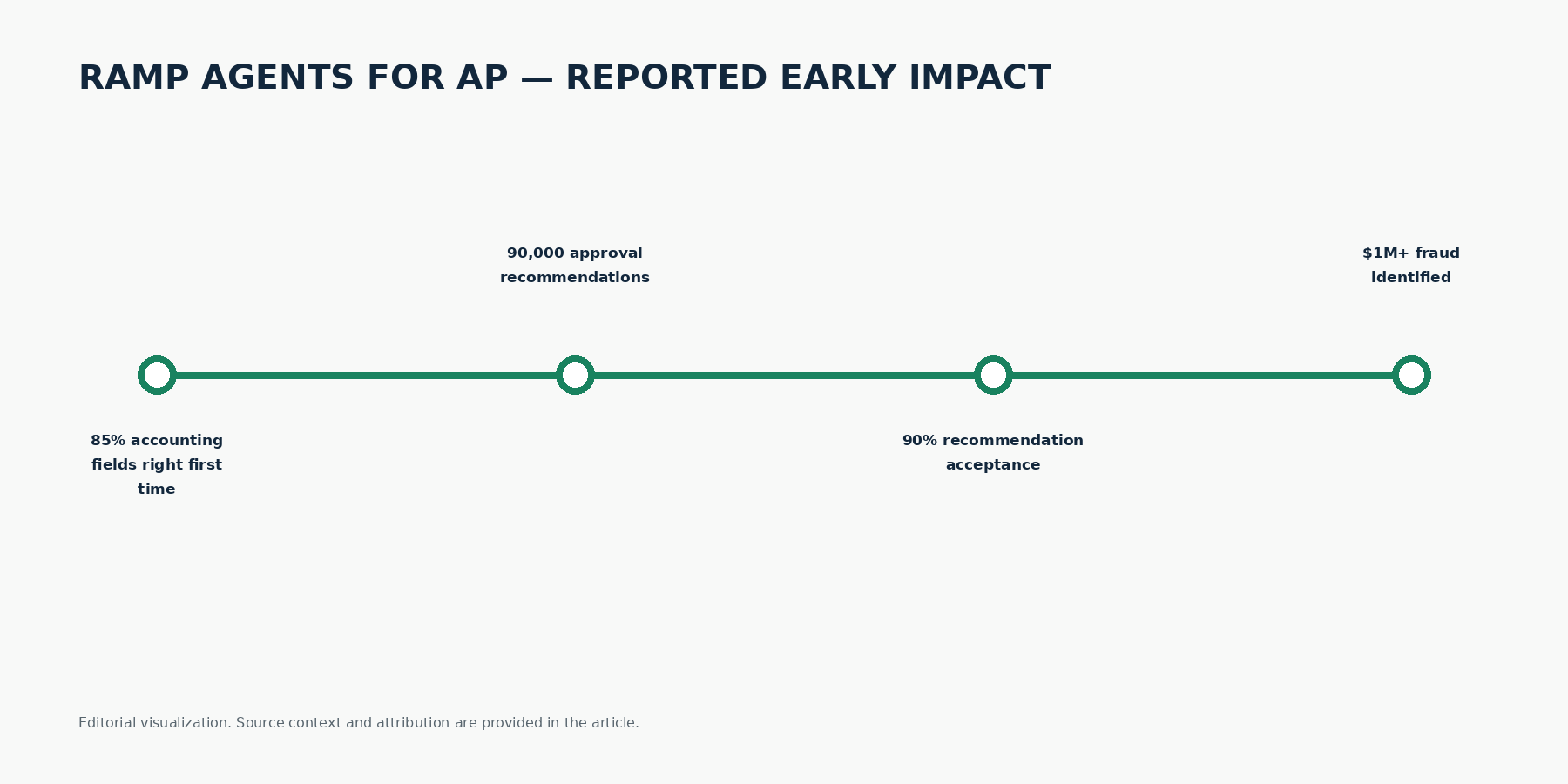
Ramp's October 7, 2025 launch of Agents for AP is interesting because it targets that decision layer. Ramp described agents that can code line items, check for fraud, recommend approvals and complete card payments. The claim is not merely faster document capture; it is software taking bounded actions inside the AP workflow.
What Changed From Automation to Agency
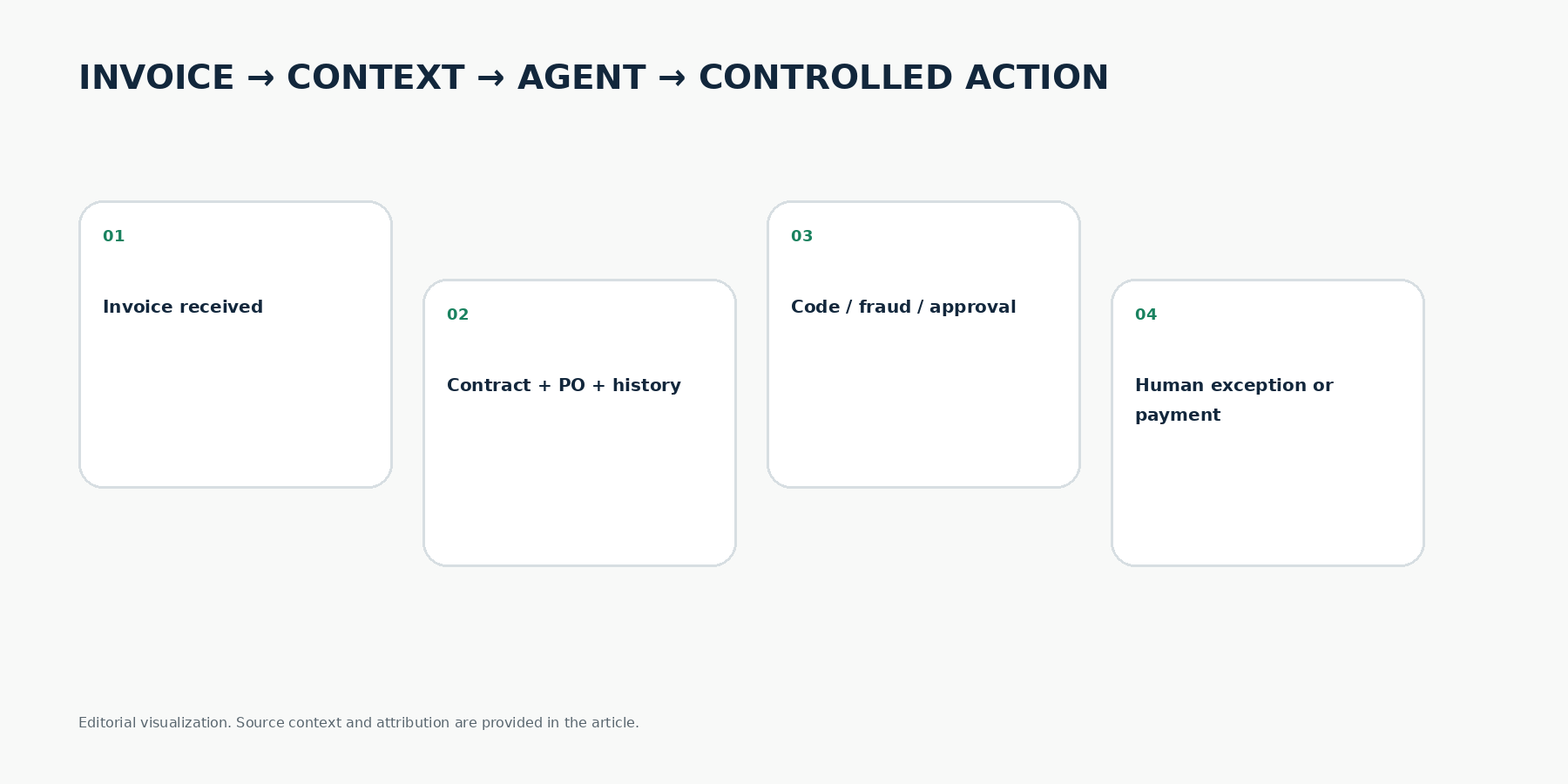
Traditional AP automation follows explicit rules. Agentic systems promise more contextual interpretation: gather evidence, infer an appropriate treatment, recommend or execute an action, and escalate exceptions. That distinction matters because invoices are messy. Vendor names change. Descriptions do not match chart-of-account labels. POs are incomplete. Duplicate-looking documents may be legitimate.
An agent therefore needs more than OCR. It needs context, permissions and a clear boundary around what it may do.
The Baseline Was Already Moving
Ramp's December 2024 Bill Pay update said more than 60% of bills on its platform were being created without a keystroke and described invoice capture accuracy above 97%. Those are vendor-reported platform figures, not universal AP benchmarks. But they show that extraction and bill creation were already becoming less manual before the agent launch.
The next frontier is not reading the invoice. It is deciding what happens after the invoice has been read.
Where AP Teams Should Be Skeptical
Autonomy sounds attractive until the exception is expensive. Finance leaders should ask what evidence the agent uses, what confidence threshold triggers action, whether a decision is reversible, who approves changes to policy logic and whether every action can be reconstructed later.
The highest-value design is likely to be asymmetric: automate high-volume, low-ambiguity work aggressively; make unusual or financially material items easier for humans to review.
A Practical Evaluation Scorecard
- Analysts — Measure touches per invoice, exception reasons and time spent gathering context.
- AP managers — Measure straight-through processing separately from accuracy and rework.
- Controllers — Require audit trails, approval boundaries and segregation of duties.
- Systems teams — Test ERP sync failures, duplicate handling and identity controls.
- CFOs — Measure working-capital impact and operating leverage, not demo speed.
The Signal
AP is moving from software that records workflow to software that participates in workflow. The winning products will not be those that perform the most actions. They will be those that can perform the right actions with enough evidence, control and auditability that finance teams are willing to let them run.
Key takeaways
- For analysts
- Focus on traceability, exception handling and understanding the business process behind the automation.
- For managers
- Measure workflow outcomes, not AI activity. Establish a baseline before rollout.
- For controllers / process owners
- Treat permissions, evidence, change management and audit trails as product requirements.
- For CFOs
- Buy technology for a measurable operating problem. AI capability without reliable data and controls is not transformation.
Sources & further reading
- RampIntroducing Agents for APOctober 7, 2025
- RampBatch payments and more: 2024 Bill Pay upgradesDecember 2024
Factual product claims and statistics are limited to information available by the publication date. Vendor-reported metrics are identified as vendor/company-reported rather than independent benchmarks.
- For
- AP Specialist · AP Leader · Controller · Finance Operations · Finance Systems · CFO
- Level
- All Levels

About the author
Alex MartinezFinance Operations Correspondent
Alex covers the operational side of finance, from supplier invoices and procurement to billing, collections and cash application, with a focus on automation and better financial workflows.
The Finance Observer content is for informational purposes only and is not professional financial, tax, legal or investment advice.
Related reading
Zip’s Superagents Want to Run Procurement Work. The Hard Part Is Governing the Decisions.
Zip’s role-based Superagents can coordinate task agents, act across connected systems and escalate to humans. For finance and procurement, the governance layer — not the autonomy — is the story.

Procurement’s AI Divide Is Becoming a Performance Divide.
Deloitte’s 2025 Global CPO Survey found top procurement organizations putting up to 24% of budgets into technology and reporting three times greater GenAI returns than peers — a gap that now looks like an operating-model choice.

Procurement’s Cost Mandate Is Back. Resilience Is Making It Harder to Deliver.
Cost control is back as the dominant executive measure of procurement — but supplier diversification, longer contracts and safety stock all cost money. The 2026 question is which premium is worth paying.
Related across formats
Curated video and audio that share this article's finance topics.
SAP’s Autonomous Finance Vision: What CFOs Should Look For Beyond the AI Demo
SAP
In this SAP Finance Connect keynote, SAP presents how AI assistants and agents could fit into core finance workflows, from accounting and consolidation to planning, billing and payments. As a vendor-hosted keynote, its product capabilities and reported benefits are SAP and participant claims rather than independently verified outcomes.
1Password’s CAO on Where AI Fits in a Well-Run Accounting Team
Senad Mustafic · Chief Accounting Officer, 1Password
Senad Mustafic, Chief Accounting Officer at 1Password, joins Kinter controller Armen Aklian, CPA, for an on-demand fireside chat (The CFO Track) about his path from financial analysis into controllership, how his thinking on AI has changed, and his approach to AI adoption at 1Password.

CFO Weekly
Why Accounting Judgment Still Matters When AI Does the Work
Host Megan Weis and Kerrie Jones, Financial Controller at Peak Living, on why following the correct process doesn’t guarantee a sensible outcome — and how controllers can teach accountants when to question the output, including AI’s. CFO Weekly is produced by Personiv.
CFO Weekly
Editor's PickThe Rise of AI-Driven Finance Teams
A forward-looking discussion on AI agents transforming accounts receivable, the shift from finance operators to finance architects, “headless finance,” and what the CFO function could look like in the next three to five years.