
AI & Automation
Finance AI Is Moving Up the Value Chain. The Best Returns Are No Longer in Automation.
KPMG’s 2026 global finance study finds the strongest AI gains in decision speed, decision quality and forecasting—not routine task elimination. The emerging divide is between finance teams using AI to process work and those redesigning how decisions get made.
For CFO · FP&A Leader · FP&A Analyst · Finance Systems
Level All Levels
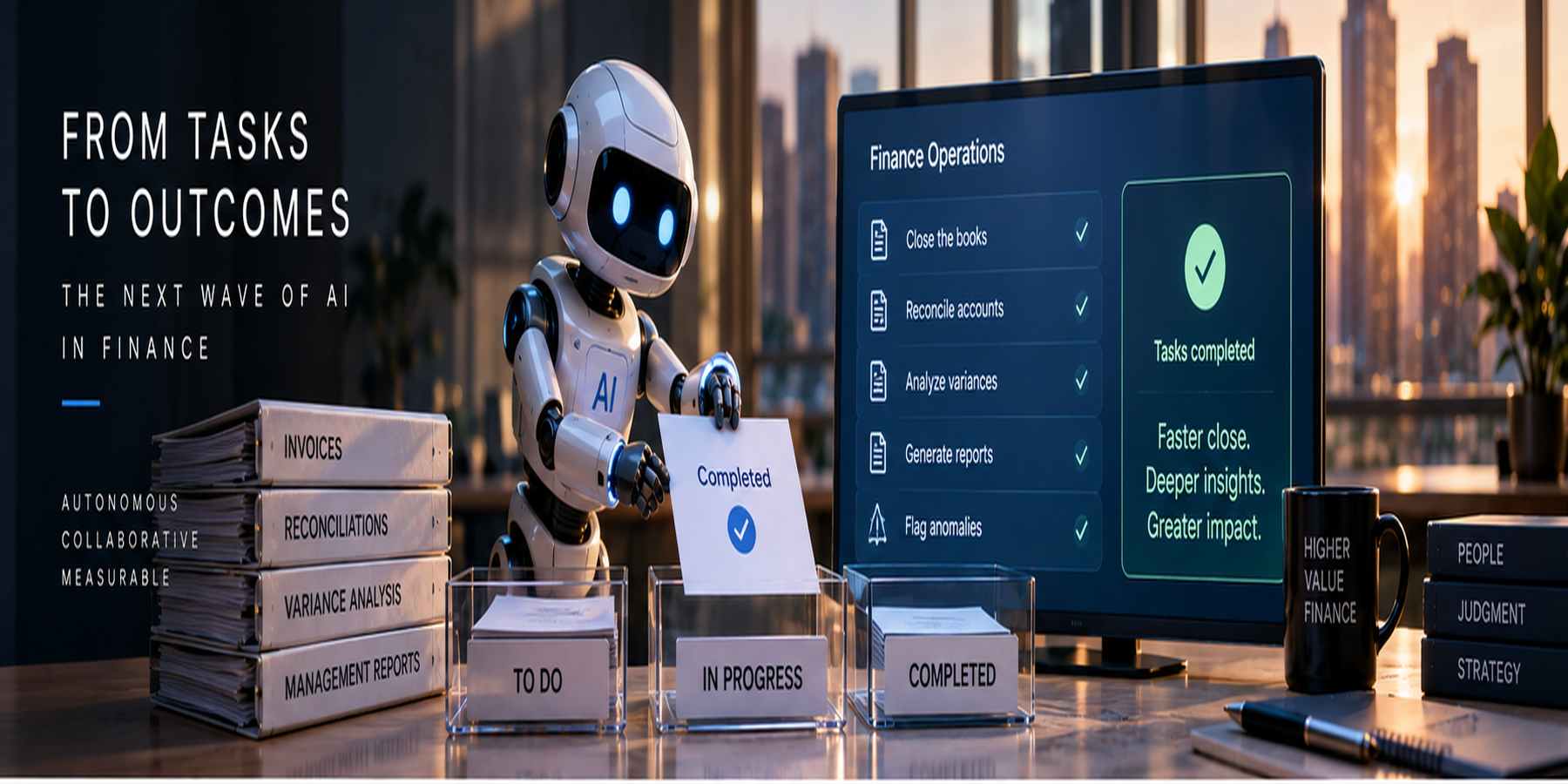
For most of the first wave of AI in finance, the business case sounded familiar.
Do the same work faster. Generate commentary. Match transactions. Extract invoices. Draft reports. Reduce manual effort.
In 2026, the more interesting value is showing up somewhere else.
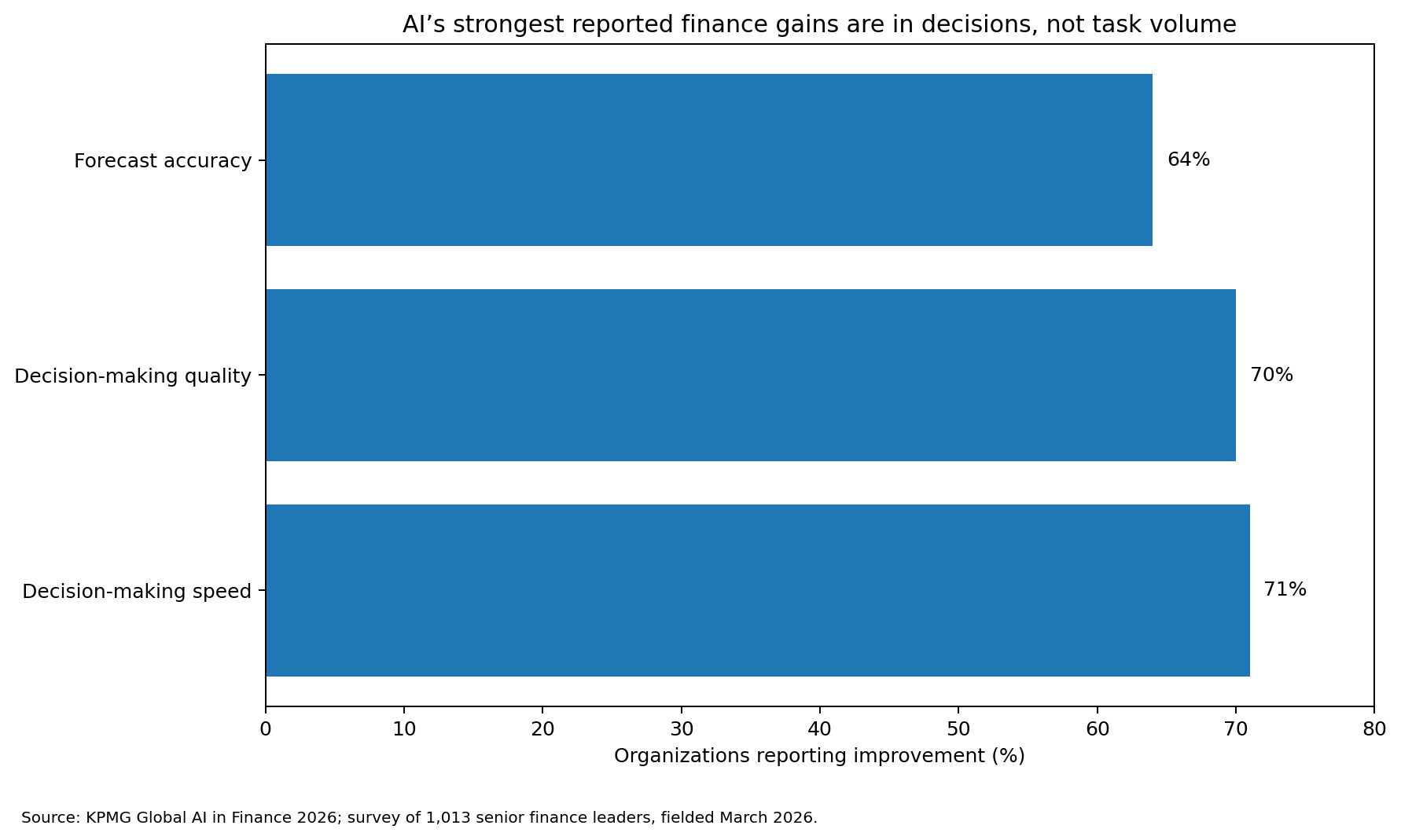
KPMG’s Global AI in Finance study, based on 1,013 senior finance leaders across 20 countries and 13 sectors, finds that the most frequently reported gains are decision-making speed, at 71%; decision-making quality, at 70%; and forecasting accuracy, at 64%.
Those are not back-office productivity metrics.
They describe finance becoming better at deciding.
That distinction matters because it changes what CFOs should automate next. The highest-value AI use cases may no longer be the processes with the largest number of repetitive tasks. They may be the decisions where finance is slow, inconsistent or unable to synthesize enough information.
KPMG calls this a shift from cost lever to decision engine. The phrase is useful because it captures a change that many finance technology roadmaps have not yet made.
Adoption is broad. Exceptional performance is not.
The headline adoption numbers are impressive.
KPMG says active AI use across finance rose from 30% in 2024 to 75% in 2026. Seventy-one percent of respondents say AI is meeting or exceeding ROI expectations.
But only 23% say it is exceeding expectations.
That gap is the story. AI is becoming normal without becoming transformative everywhere.
A company can deploy copilots, automate commentary and add machine learning to forecasting without materially changing the quality of finance. The technology may save hours while leaving the operating model intact.
The organizations pulling ahead appear to be doing something different: directing AI at judgment-heavy work, creating stronger governance and measurement around it, and building a workforce capable of challenging and using the output.
Why judgment-heavy work is finally automatable
Traditional finance automation thrives when the rule is stable. Match an invoice to a purchase order. Route an approval. Calculate depreciation. Apply a threshold.
Judgment-heavy finance is harder.
A forecast miss may reflect pricing, mix, timing, seasonality, customer behavior or a one-time operational event. A margin decline can require data from sales, supply chain, pricing and finance before anyone knows what happened.
Generative and agentic AI are better suited to this kind of work because they can combine structured and unstructured information, interpret questions and orchestrate multiple analytical steps.
That does not mean the AI possesses CFO judgment. It means more of the work surrounding judgment can be compressed.
An analyst can ask for the largest unexplained deviations, retrieve supporting data, generate hypotheses and prepare a first-pass narrative before deciding what actually matters.
The value comes from reducing the distance between signal and decision.
Agentic AI appears to widen the performance gap
KPMG’s most provocative finding concerns agentic AI.
Organizations deploying agentic AI in finance reported an average 32-percentage-point advantage over non-deployers across the study’s performance metrics. KPMG says the gap approaches 40 points for forecast accuracy and ROI.
This is correlation in a survey, not proof that agents caused the performance difference. That caveat is essential.
More mature organizations are likely to be better positioned to deploy agentic AI in the first place. They may have cleaner data, more standardized processes, stronger technology teams and better governance. Those same characteristics can improve finance performance independently of AI.
Still, the result is worth taking seriously. Agents can do something a conventional copilot cannot: move across steps.
A forecasting agent might retrieve actuals, compare them with plan, identify drivers, query operational data, propose a revised scenario and route an exception to a human. That is closer to a finance workflow than a chatbot response.
The next automation target is the decision cycle
Finance leaders often measure automation with task metrics: touches removed, hours saved, percentage straight-through processed. Those remain useful.
Decision-oriented AI needs different measures.
How long does it take from a material variance appearing to management understanding why it happened? How quickly can finance produce a credible downside scenario? How many decisions are revisited because the original analysis used incomplete information? How often do business leaders wait for finance to assemble data?
Those are decision-cycle metrics.
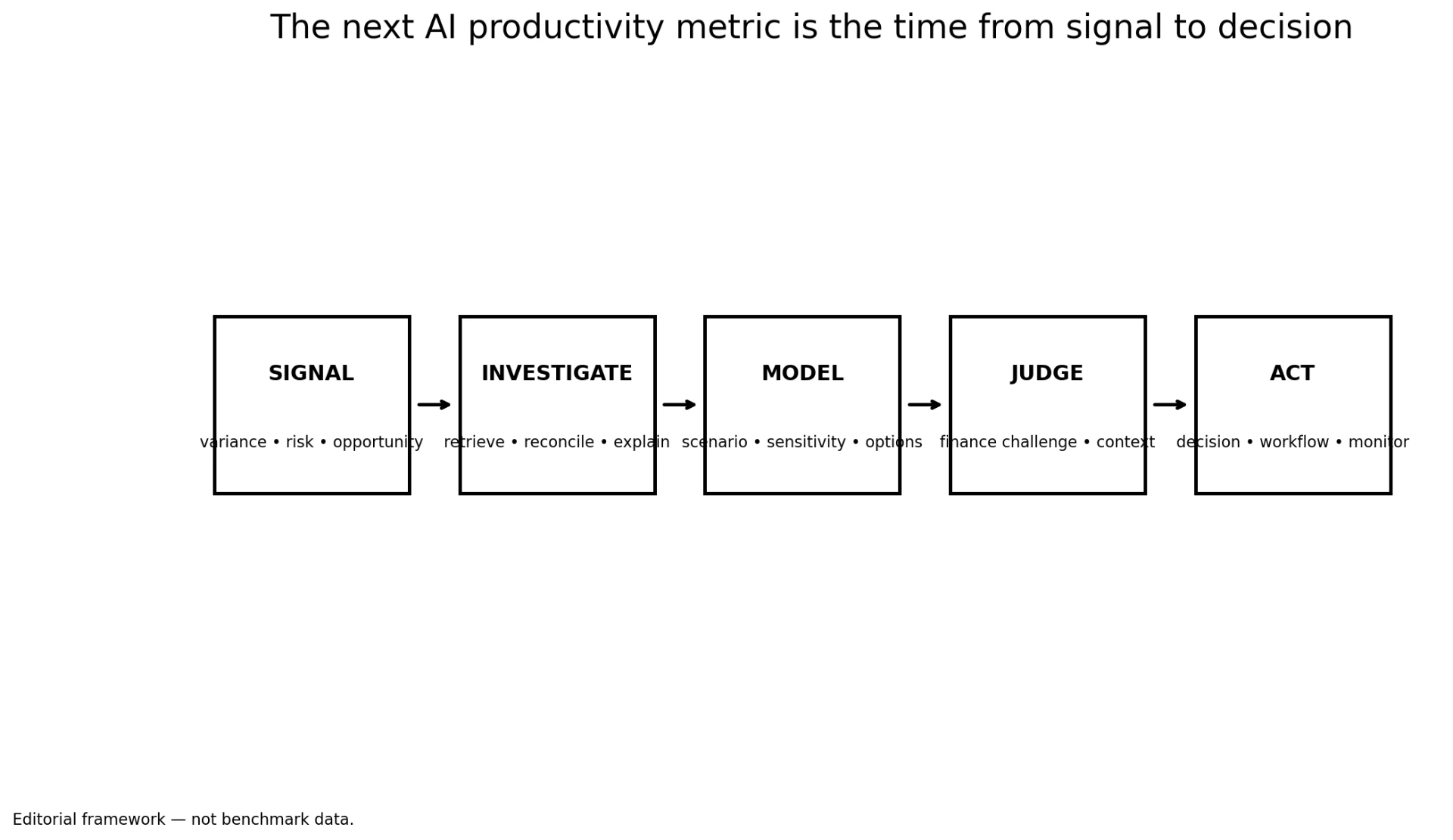
The best AI use case may be the one that compresses a five-day decision cycle to five hours even if it eliminates relatively few tasks.
For FP&A teams, that is a major reframing.
Forecast accuracy is not the same as forecast usefulness
KPMG reports 64% of organizations seeing improvement in forecast accuracy.
CFOs should resist turning that statistic into a simplistic mandate to “use AI to make the forecast more accurate.”
Forecast accuracy depends on the business, horizon and volatility. A highly accurate forecast can still be strategically useless if it arrives too late or hides the range of possible outcomes.
AI can create more value by improving forecast responsiveness. Instead of rebuilding a full model every time an assumption changes, finance can use AI to identify affected drivers, generate scenarios and explain the propagation through revenue, margin, working capital and cash.
The goal is not one perfect forecast. It is a finance organization that can update its view of the future faster than the environment changes.
Data quality remains the constraint nobody can prompt away
The more sophisticated the use case, the more painful bad data becomes.
KPMG says 36% of respondents identify improving data quality, integration and interoperability as their greatest opportunity to extract more value from AI—and data quality is also among the most frequently cited vulnerabilities.
This is why AI can disappoint even when the model itself performs well.
A variance agent cannot reconcile conflicting definitions of gross margin unless the organization tells it which definition governs. A forecasting model cannot infer whether an ERP field is systematically populated three days late. A commercial-analysis agent cannot fix customer hierarchies that finance and sales define differently.
AI exposes semantic debt. That may be one of its most useful effects.
Finance teams that want better AI will have to resolve definitions and data ownership they have tolerated for years.
Governance is showing up as a performance variable
One of the strongest findings in the KPMG study is counterintuitive. Governance does not appear to be slowing down high performers.
Organizations that can efficiently produce AI audit evidence report materially stronger outcomes: KPMG cites 33% versus 6% on significant error reduction and 42% versus 14% on confidence in scaling AI.
Again, the survey does not prove causality. But it undermines the idea that controls are merely friction.
A finance organization can scale AI faster when it knows which models are approved, which data they can access, what human review is required and how an output can be reproduced. Without that foundation, every new use case becomes a bespoke risk debate.
Governance can therefore behave like infrastructure.
Finance skills are becoming the next bottleneck
Technology is moving faster than finance job design.
KPMG says 38% of organizations are upskilling existing finance teams, while only 28% are hiring for different skill sets. The report identifies data fluency as a critical capability.
That is not the same as asking accountants to become data scientists. The emerging finance skill is the ability to interrogate evidence.
Can an analyst tell whether an AI-generated driver analysis is economically plausible? Can a controller identify the source data behind an exception? Can FP&A distinguish a statistical relationship from a business cause? Can a finance manager explain why an agent recommended an action?
As AI produces more analysis, human finance work shifts toward evaluation. The paradox is that better automation can make domain expertise more valuable, not less.
A different AI portfolio for the CFO
CFOs should consider separating the AI portfolio into three layers.
- 01Task automation — Extraction, classification, drafting and routine reconciliation.
- 02Workflow automation — Agents coordinating multiple steps across a process.
- 03Decision augmentation — AI helping finance interpret signals, model alternatives and choose actions.
The layers have different economics.
Task automation produces visible efficiency. Workflow automation can reduce cycle time and handoffs. Decision augmentation can influence revenue, margin, capital allocation and risk—but is harder to measure.
That is exactly why it deserves more disciplined measurement, not less.
The question for 2027 is already visible
The 2026 data suggests AI adoption itself is becoming a weak differentiator. If three quarters of finance organizations are already active users, simply having AI says little about performance.
The competitive question becomes where the intelligence sits in the operating model.
Does AI write the commentary after finance has already made the decision? Or does it help finance detect the issue, investigate the cause, model the alternatives and act sooner?
The first saves time. The second changes the function.
Finance spent years automating transactions. The next frontier is automating the distance between information and judgment.
Key takeaways
- CFO
- Adoption is no longer a differentiator. Direct the AI portfolio at decisions that are slow or poorly informed, and measure decision-cycle time alongside hours saved.
- FP&A
- Responsiveness may matter more than accuracy. Use AI to identify affected drivers and regenerate scenarios quickly rather than chasing one perfect forecast.
- Controllers and finance systems
- Data definitions, ownership and audit evidence are prerequisites. KPMG’s survey associates assurance readiness with stronger reported outcomes.
- Finance teams
- The emerging skill is interrogating AI output — plausibility, source data and cause versus correlation.
Sources & further reading
- KPMG International2026 Global AI in Finance Report — “The Decision Advantage”Survey of 1,013 senior finance leaders, 20 countries, 13 sectors; fielded March 2026
- KPMG InternationalPress release: AI adoption in finance doubles, but assurance readiness determines who winsMay 11, 2026 — adoption, ROI, decision and assurance figures
- KPMG InternationalGlobal AI in Finance 2026 (full report PDF)Source for the 32-point agentic-AI performance association
- KPMG Cayman IslandsKPMG Global AI in Finance report summaryAugust 2026 — 23% exceeding expectations; workforce and data findings
All figures are reported survey results from KPMG’s 2026 Global AI in Finance study. The 32-percentage-point agentic-AI performance gap is an association observed in survey data, not evidence that agentic AI caused the difference. Portfolio, measurement and governance recommendations are editorial analysis. No information published after September 6, 2026 is used and no quotes are invented.
- Topics
- AI & Automation
- For
- CFO · FP&A Leader · FP&A Analyst · Finance Systems
- Level
- All Levels

About the author
Daniel BrooksFP&A & Analytics Editor
Daniel covers planning, forecasting and financial analytics, focusing on how finance teams are using better data, technology and new planning methods to improve business decisions.
The Finance Observer content is for informational purposes only and is not professional financial, tax, legal or investment advice.
Related reading
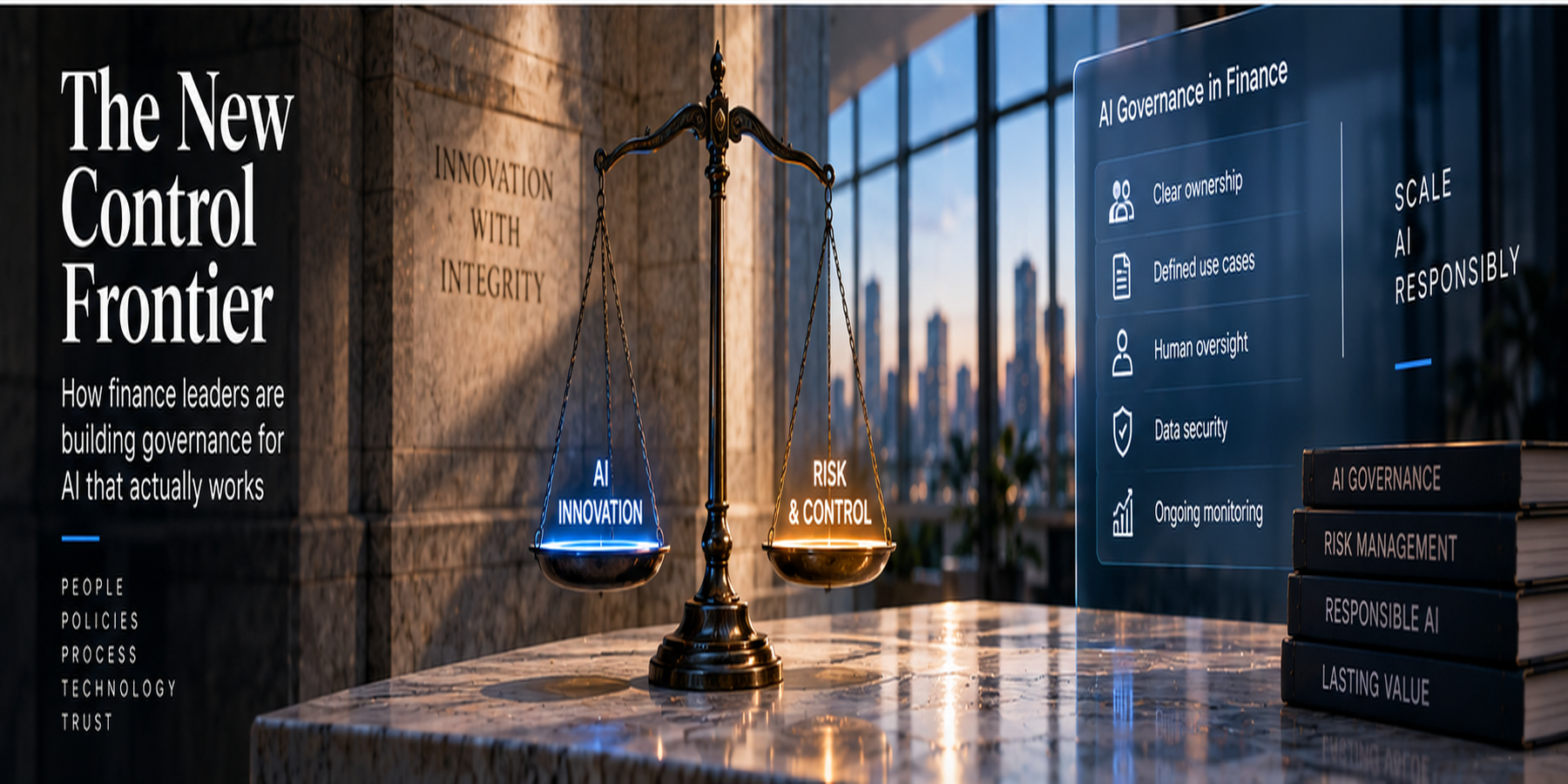
Finance Is Deploying AI Agents Faster Than It Can Govern Them
A vendor-sponsored survey of more than 1,500 finance leaders finds 92% under pressure to prove agentic-AI ROI, only 7% prioritizing governance over speed and 30% who have not updated controls in the past year.

SAP’s Clean-Core Strategy Is Becoming an AI Strategy
SAP Domain Models are trained on SAP code, data, metadata and process knowledge — and are being used to generate clean-core-compliant extensions. Clean core is no longer only about easier upgrades; it is becoming the foundation for governable enterprise AI.
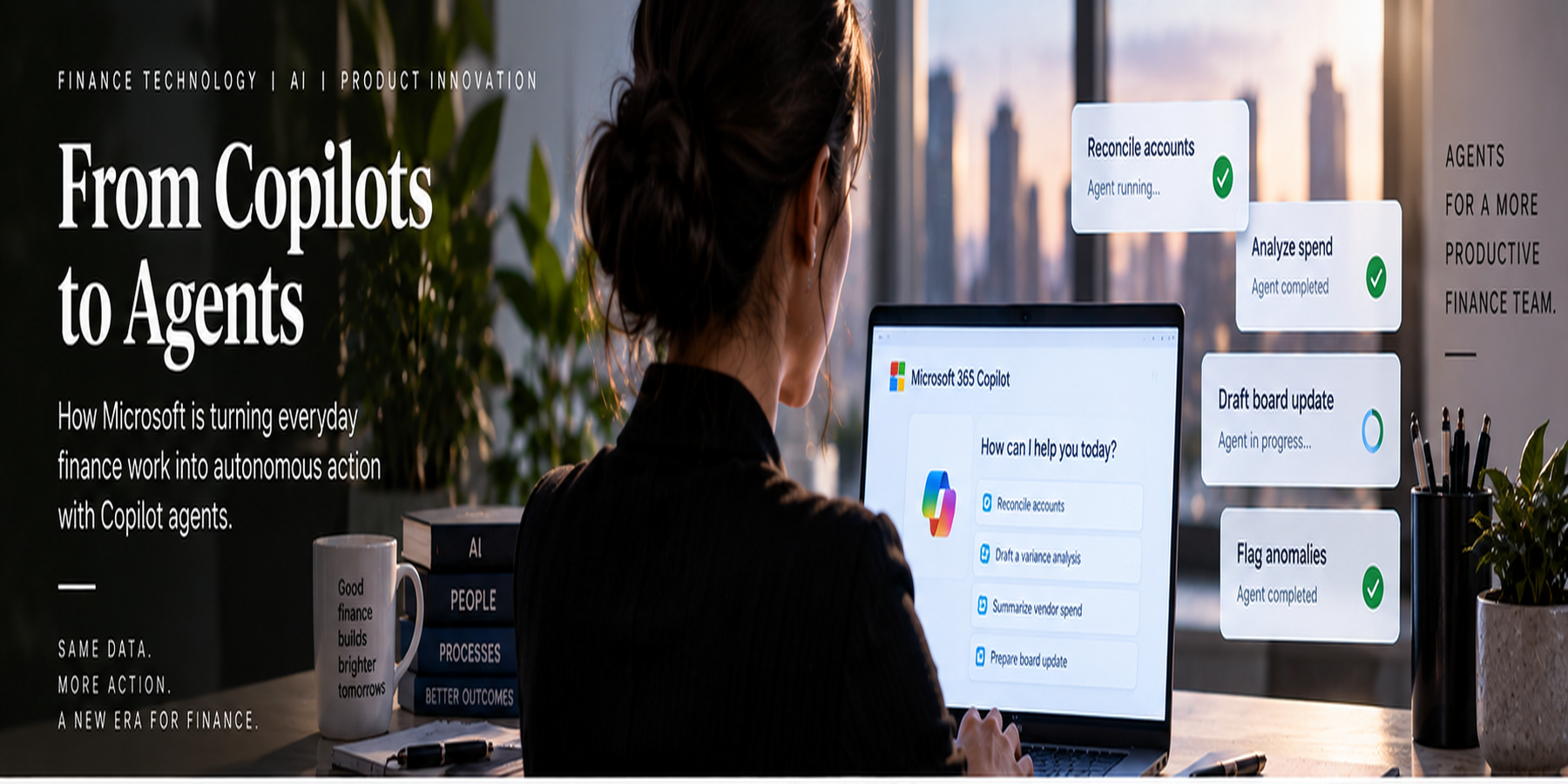
Microsoft Is Moving the Finance Interface Out of the ERP
Finance Agent answers AP and AR questions and takes selected ERP actions from inside Copilot, with MCP as the plumbing. The ERP stays the system of record — but may stop being the system of engagement.
Related across formats
Curated video and audio that share this article's finance topics.
SAP’s Autonomous Finance Vision: What CFOs Should Look For Beyond the AI Demo
SAP
In this SAP Finance Connect keynote, SAP presents how AI assistants and agents could fit into core finance workflows, from accounting and consolidation to planning, billing and payments. As a vendor-hosted keynote, its product capabilities and reported benefits are SAP and participant claims rather than independently verified outcomes.
1Password’s CAO on Where AI Fits in a Well-Run Accounting Team
Senad Mustafic · Chief Accounting Officer, 1Password
Senad Mustafic, Chief Accounting Officer at 1Password, joins Kinter controller Armen Aklian, CPA, for an on-demand fireside chat (The CFO Track) about his path from financial analysis into controllership, how his thinking on AI has changed, and his approach to AI adoption at 1Password.

CFO Weekly
Why Accounting Judgment Still Matters When AI Does the Work
Host Megan Weis and Kerrie Jones, Financial Controller at Peak Living, on why following the correct process doesn’t guarantee a sensible outcome — and how controllers can teach accountants when to question the output, including AI’s. CFO Weekly is produced by Personiv.
CFO Weekly
Editor's PickThe Rise of AI-Driven Finance Teams
A forward-looking discussion on AI agents transforming accounts receivable, the shift from finance operators to finance architects, “headless finance,” and what the CFO function could look like in the next three to five years.