
FP&A, Planning & Analytics · AI & Automation
FP&A Has a New Software Class — and Investors Are Paying Attention
Aleph's $29 million Series B is a window into why AI-native planning tools are gaining ground.
For FP&A Analyst · FP&A Leader · Financial Analyst · CFO
Level All Levels
Why FP&A Software Is Attracting New Capital
For years, FP&A teams have lived between ERP data, spreadsheets, BI tools and planning platforms. The category is mature, but the workflow is still fragmented enough to create room for a new generation of vendors.
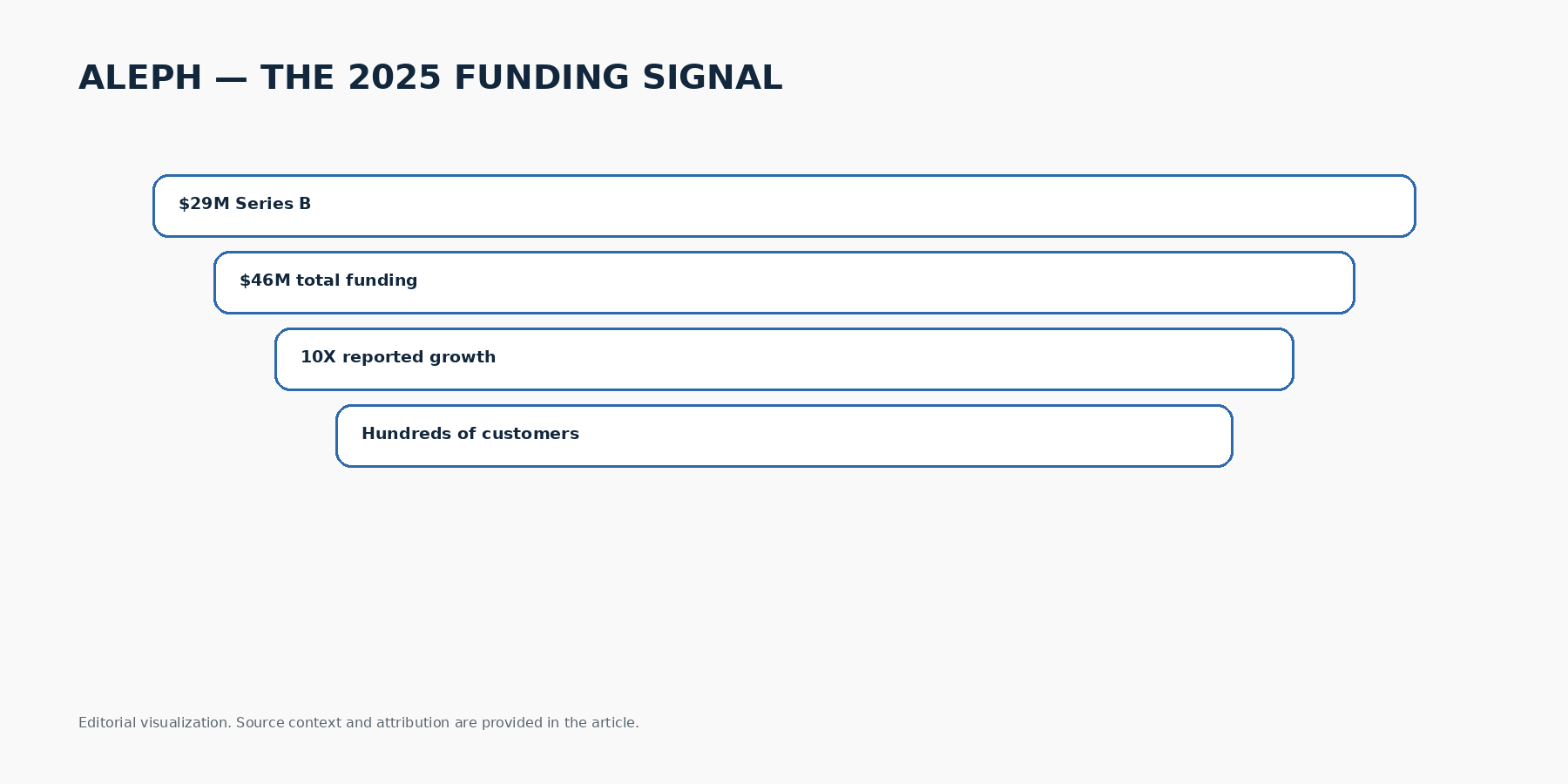
On September 17, 2025, Aleph announced a $29 million Series B led by Khosla Ventures, bringing reported total funding to $46 million. The company said it had grown 10X since its Series A and was powering FP&A workflows for companies including Zapier, Turo, Harvey and Chess.com.
The financing matters less as a venture-capital headline than as a signal about what investors think is still unresolved in finance.
The Wedge: Keep the Spreadsheet, Fix the Data Path
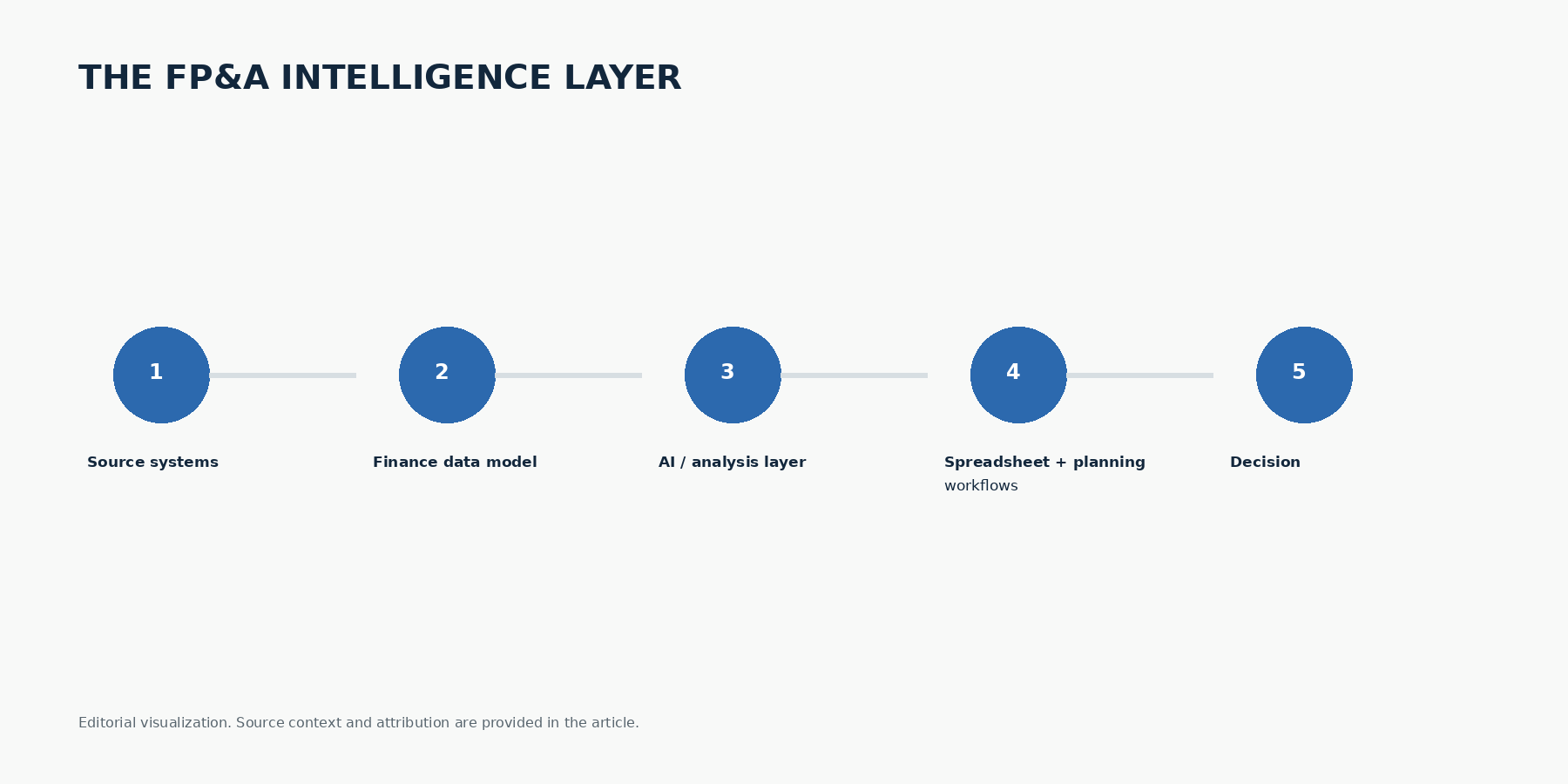
A recurring tension in FP&A software is that finance professionals often like the flexibility of spreadsheets but dislike the manual work required to feed and reconcile them. AI-native FP&A vendors are trying to attack that middle layer: connect source systems, make data easier to retrieve, reduce repetitive model maintenance and let finance professionals interrogate information without rebuilding every analysis manually.
What “AI-Native FP&A” Should Have to Prove
Can the system trace a number back to source data? Can users distinguish actuals, assumptions and generated commentary? Does the model preserve finance definitions consistently? Can an analyst reproduce an answer? Can permissions follow the underlying data? Can the workflow survive multiple entities, currencies and planning versions?
If not, natural-language analysis may be convenient without being dependable.
The Startup Test
Aleph's reported growth and financing show demand, not category victory. The harder test comes when customers scale: larger data models, more stakeholders, audit requirements, security reviews and complex planning calendars.
For finance teams evaluating a younger vendor, product velocity is valuable but should be weighed against implementation depth, controls, integration resilience and the ability to export or reconstruct critical models.
Why This Matters to Analysts
The most immediate change is not that AI writes the forecast. It is that analysts may spend less time locating and stitching data together. That moves value toward model design, driver selection, scenario interpretation and communication with the business.
The Signal
The new FP&A contest is not simply spreadsheet versus planning platform. It is becoming a contest over the intelligence layer between operating data and financial decisions. Aleph's funding round is one sign that investors expect that layer to be rebuilt.
Key takeaways
- For analysts
- Focus on traceability, exception handling and understanding the business process behind the automation.
- For managers
- Measure workflow outcomes, not AI activity. Establish a baseline before rollout.
- For controllers / process owners
- Treat permissions, evidence, change management and audit trails as product requirements.
- For CFOs
- Buy technology for a measurable operating problem. AI capability without reliable data and controls is not transformation.
Sources & further reading
- AlephSeries B announcement
- GlobeNewswireAleph secures $29 million Series B to shape and lead the future of AI-native FP&ASeptember 17, 2025
Factual product claims and statistics are limited to information available by the publication date. Vendor-reported metrics are identified as vendor/company-reported rather than independent benchmarks.
- For
- FP&A Analyst · FP&A Leader · Financial Analyst · CFO
- Level
- All Levels

About the author
Daniel BrooksFP&A & Analytics Editor
Daniel covers planning, forecasting and financial analytics, focusing on how finance teams are using better data, technology and new planning methods to improve business decisions.
The Finance Observer content is for informational purposes only and is not professional financial, tax, legal or investment advice.
Related reading
The Forecast Is Becoming a Living System
FP&A is moving from periodic forecasting toward a continuously updated view of the business — but spreadsheets, fragmented data and process design still stand in the way.

FP&A Bought More Tools. The Data Problem Got Worse.
AFP’s 2025 benchmark found unreliable and inaccessible data are still FP&A’s biggest technology obstacles, with spreadsheets nearly universal — the next upgrade is the information supply chain, not another application.

Financial Planning Software Is Converging Around Continuous Planning—and AI Is Raising the Bar.
Gartner’s December 2025 market view put integrated, intelligent and continuous planning at the center of the category — while spreadsheets stayed nearly universal. The buying question is shifting to governed planning across connected data and AI.
Related across formats
Curated video and audio that share this article's finance topics.
SAP’s Autonomous Finance Vision: What CFOs Should Look For Beyond the AI Demo
SAP
In this SAP Finance Connect keynote, SAP presents how AI assistants and agents could fit into core finance workflows, from accounting and consolidation to planning, billing and payments. As a vendor-hosted keynote, its product capabilities and reported benefits are SAP and participant claims rather than independently verified outcomes.
1Password’s CAO on Where AI Fits in a Well-Run Accounting Team
Senad Mustafic · Chief Accounting Officer, 1Password
Senad Mustafic, Chief Accounting Officer at 1Password, joins Kinter controller Armen Aklian, CPA, for an on-demand fireside chat (The CFO Track) about his path from financial analysis into controllership, how his thinking on AI has changed, and his approach to AI adoption at 1Password.

CFO Weekly
Why Accounting Judgment Still Matters When AI Does the Work
Host Megan Weis and Kerrie Jones, Financial Controller at Peak Living, on why following the correct process doesn’t guarantee a sensible outcome — and how controllers can teach accountants when to question the output, including AI’s. CFO Weekly is produced by Personiv.
The CFO Playbook
Editor's PickThe Operator CFO: Turning Growth Ambition Into Margin, Cash and Accountability
Benzinga CFO Robert Checchia, with host David McClelland, explains why finance leaders need to get closer to operations, give P&L owners clearer numbers and connect growth decisions to margin and cash generation — plus prioritization under private-equity ownership and AI experimentation with guardrails.