
AI & Automation
The ERP Challenger Is No Longer a Thought Experiment
Rillet's rapid funding and customer growth put AI-native accounting infrastructure on the CFO agenda.
For Financial Analyst · Accounting Manager · Controller · Finance Systems · CFO
Level All Levels
A New ERP Story Has Become Harder to Ignore
Replacing a general ledger is one of the least casual decisions a finance organization can make. ERP systems sit beneath close, reporting, controls, audit and years of integrations. That inertia is why challengers rarely become strategically interesting overnight.
Rillet's 2026 trajectory changed the conversation. In August 2026 the company announced a $100 million Series C at a $1 billion valuation, bringing reported total funding above $200 million. Rillet said it served more than 600 customers. TechCrunch reported that the company had emerged from stealth in 2024 and was winning customers away from established accounting systems.
What Does AI-Native ERP Actually Mean?
Legacy finance systems were designed primarily to store, control and post transactions. Intelligence was often layered on through reports, BI tools, spreadsheets and specialist applications.
Rillet's thesis is different: connect operational data directly to a continuously updated ledger and let AI agents work against the same financial context, with human approval and audit trails. That architecture potentially changes the timing of accounting work. Instead of waiting for month-end to discover missing context, systems can attempt to classify, reconcile or explain activity closer to the event.
The Funding Timeline Tells a Story
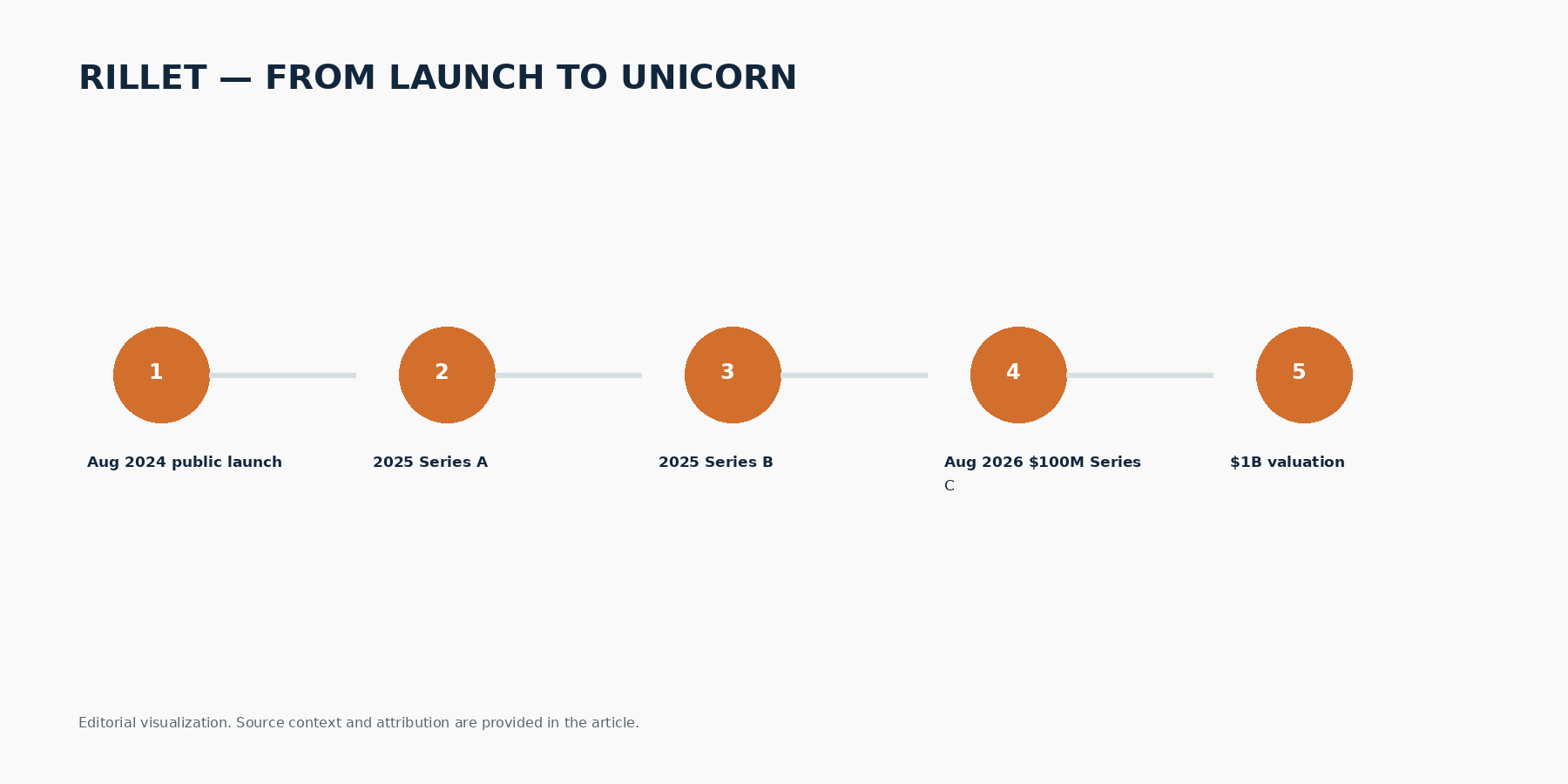
Rillet announced a $25 million Series A in 2025, a $70 million Series B roughly ten weeks later, and then the $100 million Series C in August 2026. Rapid financing does not prove product superiority, but it does show unusually strong investor conviction around AI-native accounting infrastructure.
What a CFO Should Ask Before Replacing an ERP
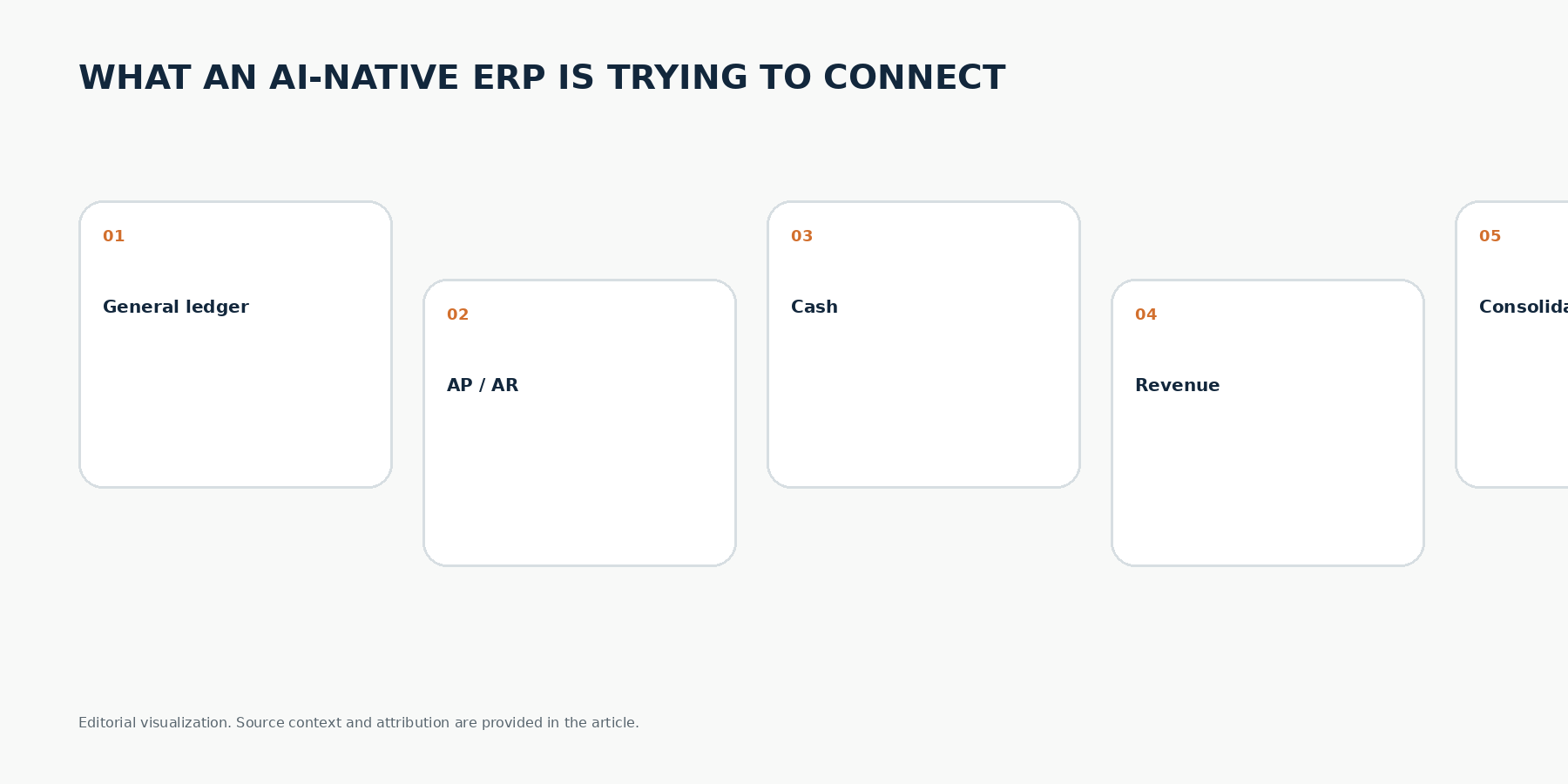
The question is not “Does it have AI?” Ask whether the ledger handles the entity, currency, tax, consolidation and audit complexity the business actually has. Ask how historical data migrates. Ask how integrations fail. Ask how permissions work. Ask how agent actions are reviewed and reversed. Ask what happens when the AI is uncertain.
An AI-native system still has to be an accounting system.
The Incumbent Advantage — and Disadvantage
Established ERP vendors have installed bases, mature control frameworks, partner ecosystems and enormous functional breadth. Challengers have the advantage of designing around current technology rather than decades of accumulated architecture.
That creates an interesting market dynamic: incumbents can embed agents into existing workflows, while startups can redesign the workflow around agents from the beginning.
The Signal
Rillet's rise makes “AI-native ERP” a category finance leaders can no longer dismiss as a startup slogan. The category still has to prove durability, controls and enterprise depth. But the possibility that the system of record itself can be rebuilt around continuous, agent-assisted accounting is now a serious product question.
Key takeaways
- For analysts
- Focus on traceability, exception handling and understanding the business process behind the automation.
- For managers
- Measure workflow outcomes, not AI activity. Establish a baseline before rollout.
- For controllers / process owners
- Treat permissions, evidence, change management and audit trails as product requirements.
- For CFOs
- Buy technology for a measurable operating problem. AI capability without reliable data and controls is not transformation.
Sources & further reading
Factual product claims and statistics are limited to information available by the publication date. Vendor-reported metrics are identified as vendor/company-reported rather than independent benchmarks.
- Topics
- AI & Automation
- For
- Financial Analyst · Accounting Manager · Controller · Finance Systems · CFO
- Level
- All Levels

About the author
Sophie GrantFinance Technology Correspondent
Sophie covers finance technology and the systems behind accounting and reporting.
The Finance Observer content is for informational purposes only and is not professional financial, tax, legal or investment advice.
Related reading

SAP’s Clean-Core Strategy Is Becoming an AI Strategy
SAP Domain Models are trained on SAP code, data, metadata and process knowledge — and are being used to generate clean-core-compliant extensions. Clean core is no longer only about easier upgrades; it is becoming the foundation for governable enterprise AI.
Microsoft Is Moving the Finance Interface Out of the ERP
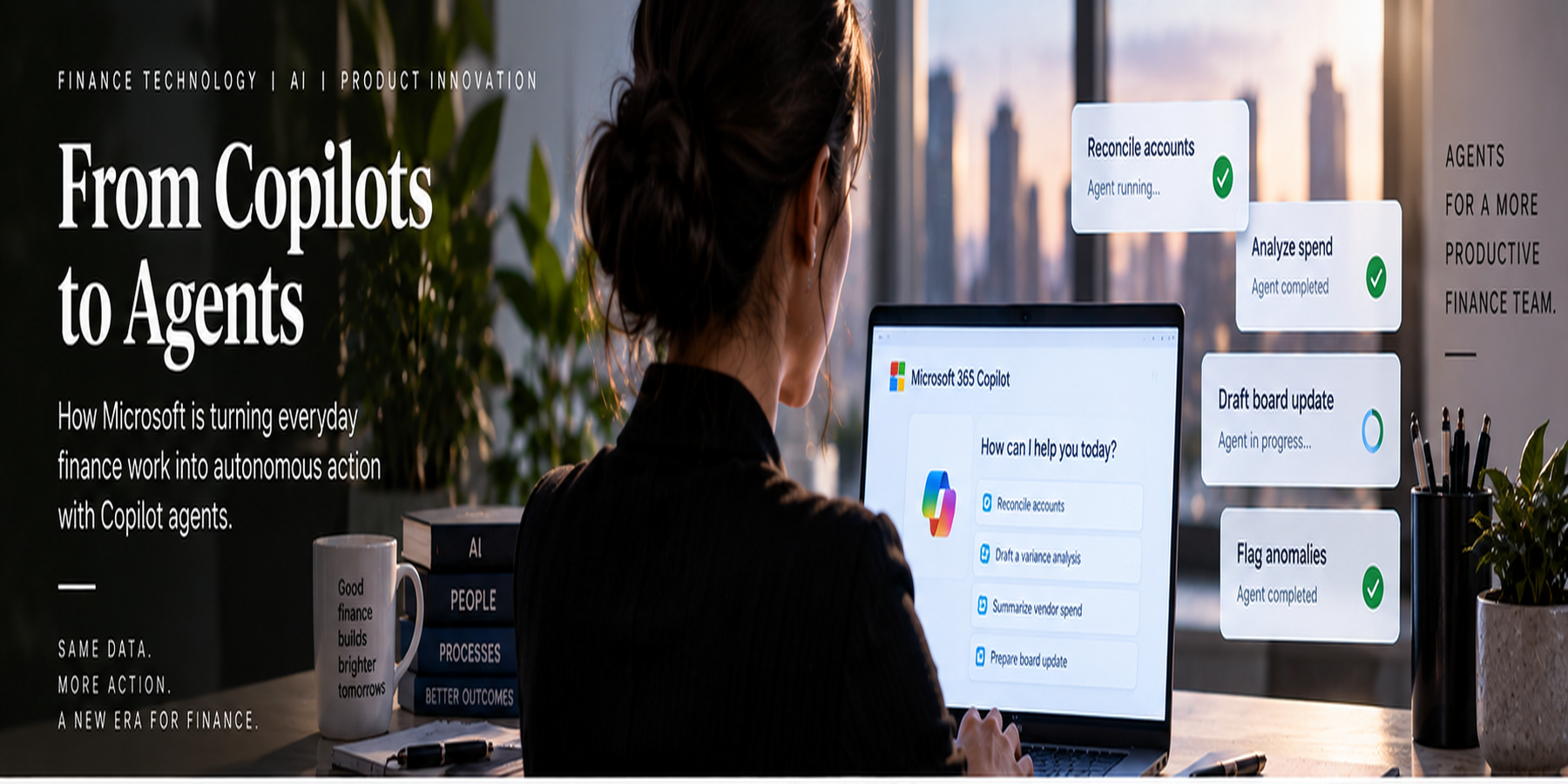
Finance Agent answers AP and AR questions and takes selected ERP actions from inside Copilot, with MCP as the plumbing. The ERP stays the system of record — but may stop being the system of engagement.

PwC Put 100,000 People on One Cloud ERP. The Real Story Is What It Removed.
PwC-reported results from its own SAP Cloud ERP program — 100,000+ professionals, 19 countries, 22 systems retired, 10x faster upgrades — make an architectural point: AI multiplies the value of a simpler core.
Related across formats
Curated video and audio that share this article's finance topics.
SAP’s Autonomous Finance Vision: What CFOs Should Look For Beyond the AI Demo
SAP
In this SAP Finance Connect keynote, SAP presents how AI assistants and agents could fit into core finance workflows, from accounting and consolidation to planning, billing and payments. As a vendor-hosted keynote, its product capabilities and reported benefits are SAP and participant claims rather than independently verified outcomes.
1Password’s CAO on Where AI Fits in a Well-Run Accounting Team
Senad Mustafic · Chief Accounting Officer, 1Password
Senad Mustafic, Chief Accounting Officer at 1Password, joins Kinter controller Armen Aklian, CPA, for an on-demand fireside chat (The CFO Track) about his path from financial analysis into controllership, how his thinking on AI has changed, and his approach to AI adoption at 1Password.

CFO Weekly
Why Accounting Judgment Still Matters When AI Does the Work
Host Megan Weis and Kerrie Jones, Financial Controller at Peak Living, on why following the correct process doesn’t guarantee a sensible outcome — and how controllers can teach accountants when to question the output, including AI’s. CFO Weekly is produced by Personiv.
CFO Weekly
Editor's PickThe Rise of AI-Driven Finance Teams
A forward-looking discussion on AI agents transforming accounts receivable, the shift from finance operators to finance architects, “headless finance,” and what the CFO function could look like in the next three to five years.